[photo: ergun tavlan / murat üstübal]
***
[photos: nathalie ritzmann]
***
Sayın Reha YÜNLÜEL,
İnternet üzerinden yayınlanan Strazburg mahreçli Bachibouzouck isimli çok dilli sanat ve dil dergisinin “evler ve mezarlar” bölümünde Aziz Nikola’nın lahitlerini yayınlanmak istenmesi ve bu doğrultuda katılımcıların çektiği resimler hakkında bilgi talebinizi konu alan Antalya Valiliği İl Kültür ve Turizm Müdürlüğünün 01.11. 2011 tarih ve 13302 sayılı yazısı eki Bakanlığımız Kültür Varlıkları ve Müzeler Genel Müdürlüğünün 14.10.2011 tarih ve 210992 sayılı yazısı incelenmiştir.
Adı geçen lahitlerin ikisi de bugün Noel Baba kilisesi içerisinde yer almaktadır. Ancak, bu lahitlerin hangisinin Noel Baba’ya ait olduğu ya da Noel Baba’ya ait lahitler olup olmadığı konusunda kesin bir bilgi yoktur.
Noel Baba kilisesi planında; bemanın güneyinde tek nefli, içte ve dışta yuvarlak apsisli iki küçük şapel ile onun güneyinde serbest haç planlı, içte ve dışta yuvarlak apsisli bir şapel yer almaktadır. 1. Güney Şapel, kuzeyde bema ile, batıda ise güney yan nef ile bağlantılıdır.
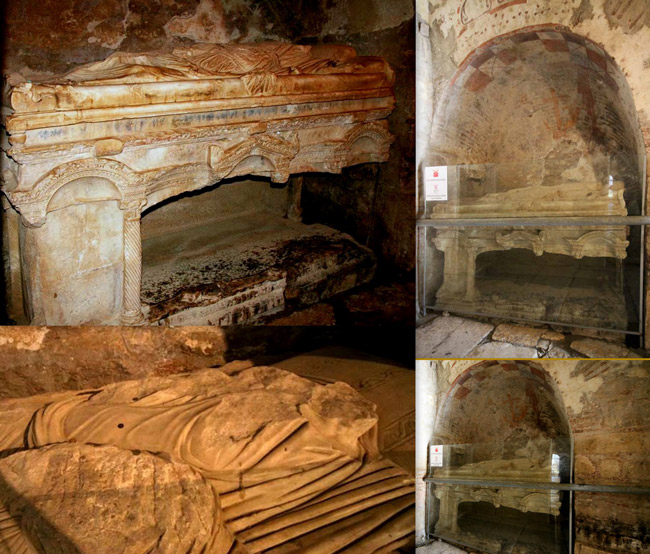
2. Güney Şapel ise, kuzeyde 1. Şapel ile, batıda güney dış yan nef ile, güneyde 3. Şapel ile geçiş bağlantılıdır. Apsis önünde bir stylobat ve apsis nişi içinde bir lahit bulunur. Güney dış yan nefin güney-doğu nişi içinde de bir lahtin yer alması bu mekanın mezar şapeli olduğunu düşündürmektedir ki, Roma Devrine ait sütunlu lahit olarak adlandırılan ve Noel Baba’ya ait olduğu düşünülen birinci lahit bu mekanda yer alır.
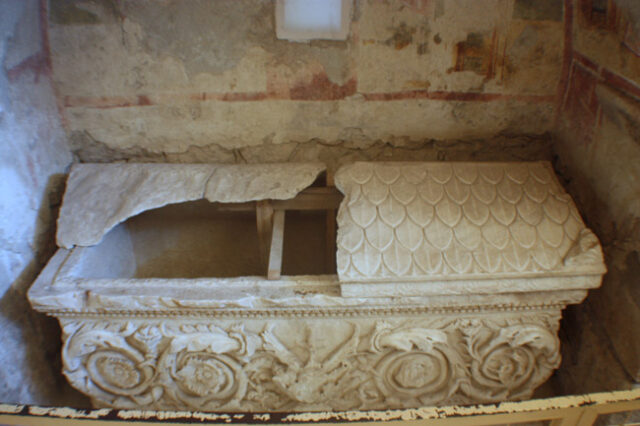
Noel Baba’ya ait olduğu düşünülen ikinci lahit ise, kuzeyde 2. Güney Şapel ile bağlantılı, batıda mezar mekanına geçişli, güney dış yan nef ile birlikte çok sayıda lahit içeren 3.Güney Şapelde yer almaktadır. Nişler içinde yer alan lahitlerden birinci niş içindeki akarthus yaprakları ile süslü Roma Devri lahdinin Noel Baba’ya ait olduğu kabul edilir. Noel Baba’nın denizcilerin de azizi olmasından dolayı lahdin üzerinin balık pulu desenleriyle süslendiği söylenmektedir. Ayrıca batıdaki mekanda Aziz Nikolaos’un hayatına dair freskoların yer alması burasının mezar şapeli olduğunu belirleyici unsurlardır.
Bilgilerinizi rica ederim.
Dear Reha YÜNLÜEL,
The letter dated 10/14/2011 and reference numbered 210992 by the General Directory of the Museums of our Ministry, attached to the letter dated 11/01/2011 and reference numbered 13302 by the Tourism and Culture Directorate of Antalya Provincial Governorship, requesting permission to publish the pictures of St Nicholas’ Sarcophagi in the section titled “homes & tombs” of Bachibouzouck, an Strasburg based, multi cultural, multi lingual art and language internet review, and information relating to the photographs taken by the participants of the review with regards to the subject, has been reviewed.
Both of the sarcophagi in question are presently located in the Church of St Nicholas. However there is no definitive information substantiating which of the two sarcophagi belonging to St Nicholas or either of them actually belonging to St Nicholas at all.
Within the St Nicholas Church’s plan, there are two small chapels to the south of the bema that each have a single nave and an apse which is curved on both sides. To the south of these chapels, there is another chapel laid on a cross-shaped ground plan with an apse with curved sides.
The First South Chapel is connected with the bema in the north and with the south outer nave in the west. The Second South Chapel, on the other hand, is connected with the First Chapel in the north side, with the outer southern nave in the west and with the Third South Chapel in the south trough a passage.
There is a stylobate in front of the apse and a sarcophagus stands inside the apse niche. The fact that there is a sarcophagus inside the southeast niche of the outer southern nave, suggests that this space may have been the burial chapel. And indeed, the first sarcophagus attributed to St Nicholas which is known as pillared sarcophagus and built during the Roman Period, is located in this vault.
The second sarcophagus attributed to St Nicholas stands in the Third Chapel that contains many sarcophagi along with the outer southern nave, connected with the burial vault through a passage in the west, and with the Second South Chapel in the north. First of the sarcophagi within the niches, which is adorned with acanthus leaves and dated to the Roman Period considered to be the sarcophagus of St Nicholas. It is believed that the fish scale pattern on this sarcophagus is related with the St Nicholas’ importance among the sailors as the patron saint. Additionally, the frescos depicting Saint Nicholas’ life inside the western space are considered to be the identifying factors for this space to be a burial chapel.
Please be informed.
Mustafa DEMİREL
Director Antalya Museum
***
***
Mektubun ingilizce çevirisindeki emekleri için Hale Koray’a teşekkürü bir borç biliriz.
Thanks to Hale Koray for the english translation of the lettre…